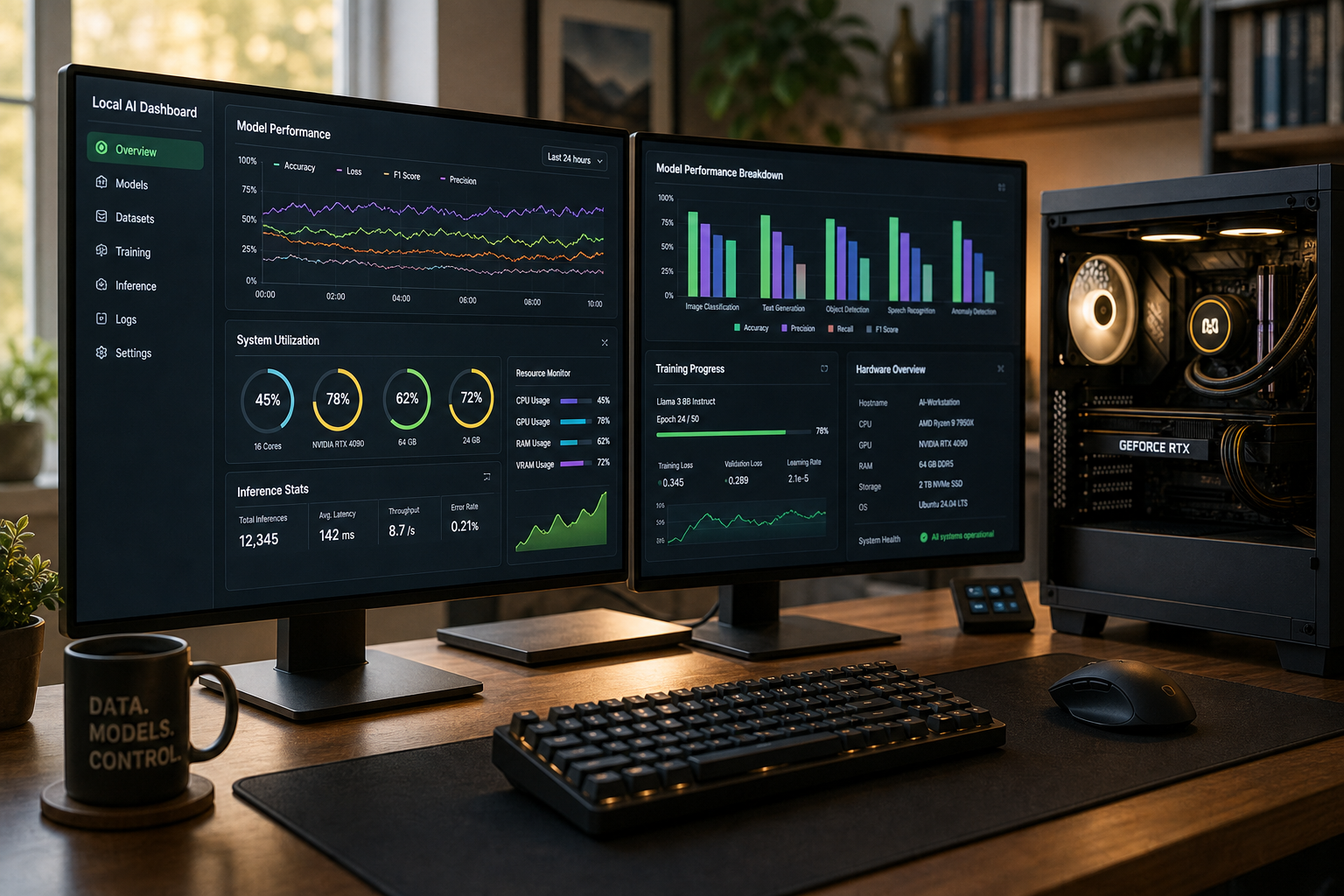
OpenBot recently unveiled a notable development in the realm of artificial intelligence with the launch of a new desktop application allowing users to run AI agents directly on their devices. This move marks a departure from the previously dominant practice of operating AI services via cloud-based platforms. For many companies concerned about data protection and desiring to avoid the high costs associated with cloud services, this presents an interesting alternative.
The Technology Behind OpenBot
OpenBot's new desktop application is designed to decentralize the use of AI agents. Instead of relying on external servers, the AI algorithms can now be executed on the user's local hardware. This is accomplished through so-called AI subscriptions that optimally utilize the user's data and computational power of individual systems. The concept harks back to earlier software models, before cloud services became the dominant paradigm.
From a technical perspective, OpenBot employs advanced compression methods and optimizations to run computationally intensive algorithms efficiently on standard hardware. These improvements might enable even users with less powerful computers to utilize high-level AI services without requiring costly upgrades.
Advantages and Potential of Local Execution
A primary advantage of executing AI agents locally via OpenBot is the increased control over personal data. Previous cloud solutions generally required transferring sensitive information to and from external servers, raising security concerns. Local execution could not only increase companies’ data control but also reduce potential attack surfaces.
Additionally, businesses heavily relying on AI services could achieve financial savings. Paying for subscriptions to cloud usage can be expensive over time. In contrast, the one-time purchase of software licenses for local use could represent a more sustainable investment, especially for small and medium-sized enterprises with limited budgets.
Distinction from Other Approaches
This local execution of AI applications stands in stark contrast to the latest developments from major tech companies that continue to heavily rely on the cloud. For instance, NVIDIA invests $3 billion in Meta to expand its cloud-based Muse platform. Similarly, Microsoft focuses on cloud-driven services, such as their new Copilot Code feature, which generates applications based on SharePoint data.
OpenBot's approach, however, reflects a niche offering more flexibility and self-management specifically tailored to the needs of smaller businesses and developers.
Market Context in the AI Sector
With the introduction of this desktop solution, OpenBot enters a market sector characterized by an increasing debate about data protection and autonomy. While providers like IBM and Kaggle invest in collaborations to assist developers in migrating to modern frameworks, OpenBot sticks to proven local structures. It remains to be seen whether this move will encourage other companies to develop similar solutions or whether the trend towards complete cloud integration continues.
In this context, the parallel development of the quantized model DeepSeek V4.1 Flash, operating with just 12 GB of VRAM, is noteworthy. This technical optimization eases access to advanced AI technology even for less capable systems, potentially spreading comparable applications even further.
In the tourism context, OpenBot’s local execution of AI agents holds potential. The capability to securely analyze guest data and create personalized experiences without resorting to external servers could enhance data protection compliance. Additionally, smaller providers might benefit from more affordable software licensing to streamline their services efficiently.
Sources
- KI Heute — Archiving technology news around AI developments.
- Microsoft News — Report from the Frontier Tour in Cologne with announcements on AI security.
This article was automatically generated using artificial intelligence.