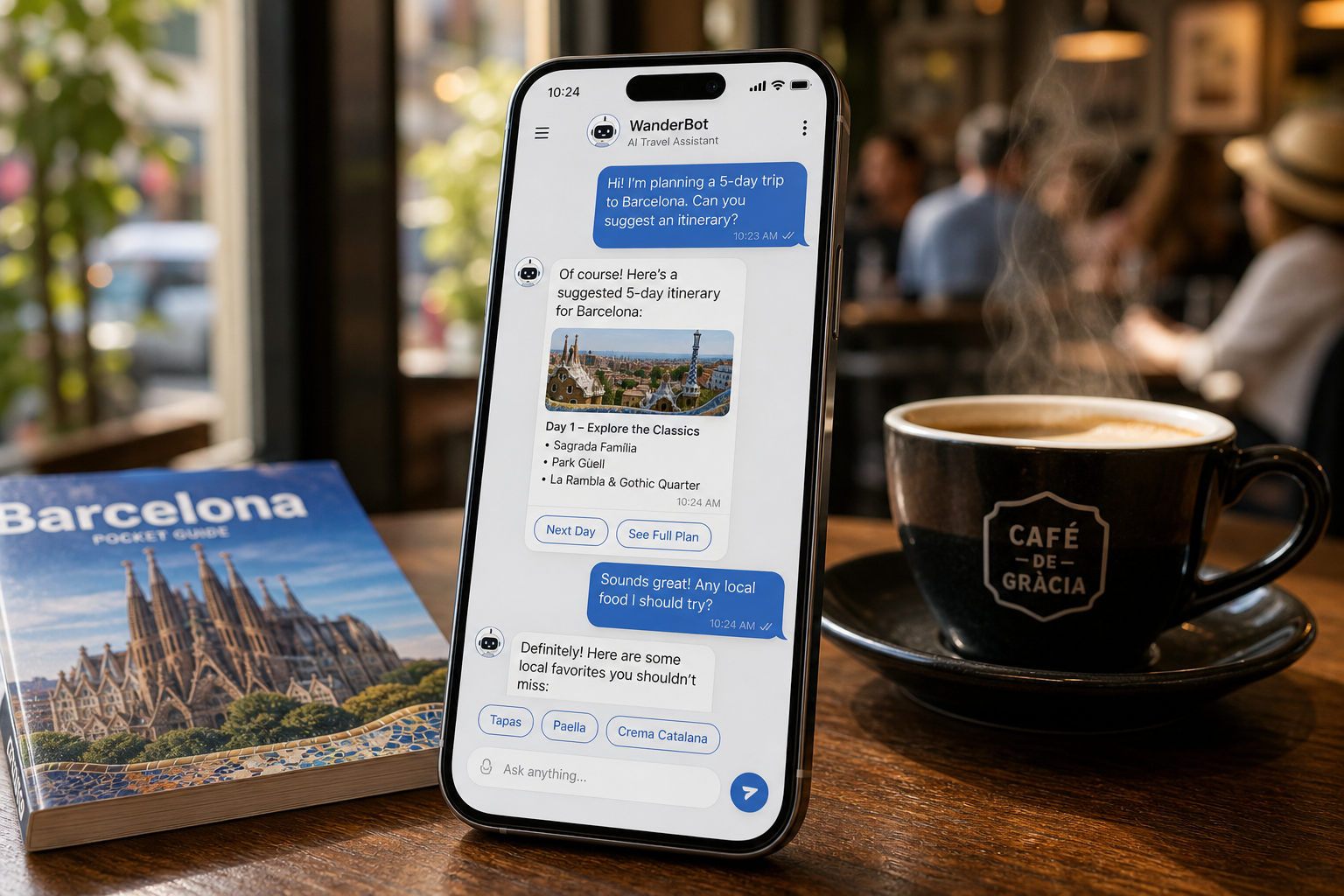
With AgentKit, OpenAI makes it easier than ever to create AI agents: build visually, test and integrate directly. For tourism businesses, this means faster chatbots, automated services and secure data connection — a real game changer for digital guest communication.
What is AgentKit?
AgentKit is a modular toolbox that developers can use to visually assemble and evaluate interactive AI agents and integrate them directly into their own products. Until now, creating such agents was often a confusing puzzle of different tools, code modules and lengthy test phases. AgentKit now promises to drastically reduce this complexity.
Visual Building with the "Agent Builder"
At the heart of AgentKit is the Agent Builder — a visual modular system reminiscent of a flowchart. Complex agent workflows can be modeled, tested and versioned using simple drag-and-drop elements. Companies such as Klarna and LY Corporation report that they have been able to create agents in just a few hours, where previously it would have taken weeks or even months.
For tourism providers who want to use chatbots for travel advice or customer inquiries, this opens up a whole new level of speed in development.
Central Data Management: Connector Registry
Data sources such as Google Drive, Dropbox or Microsoft Teams can be managed centrally via the Connector Registry. This is a practical feature for larger companies with several data silos. Tourism organizations can connect their reservation systems, CRM databases, and content libraries to create truly intelligent agents.
Implications for Tourism
For the tourism industry, AgentKit lowers the barrier to AI agent deployment significantly. Hotels can now build booking assistants, destinations can create visitor information agents, and tour operators can develop personalized planning tools — all without deep technical expertise.
By Prof. DDr. Roman Egger
Dieser Beitrag wurde automatisch mit künstlicher Intelligenz erstellt.